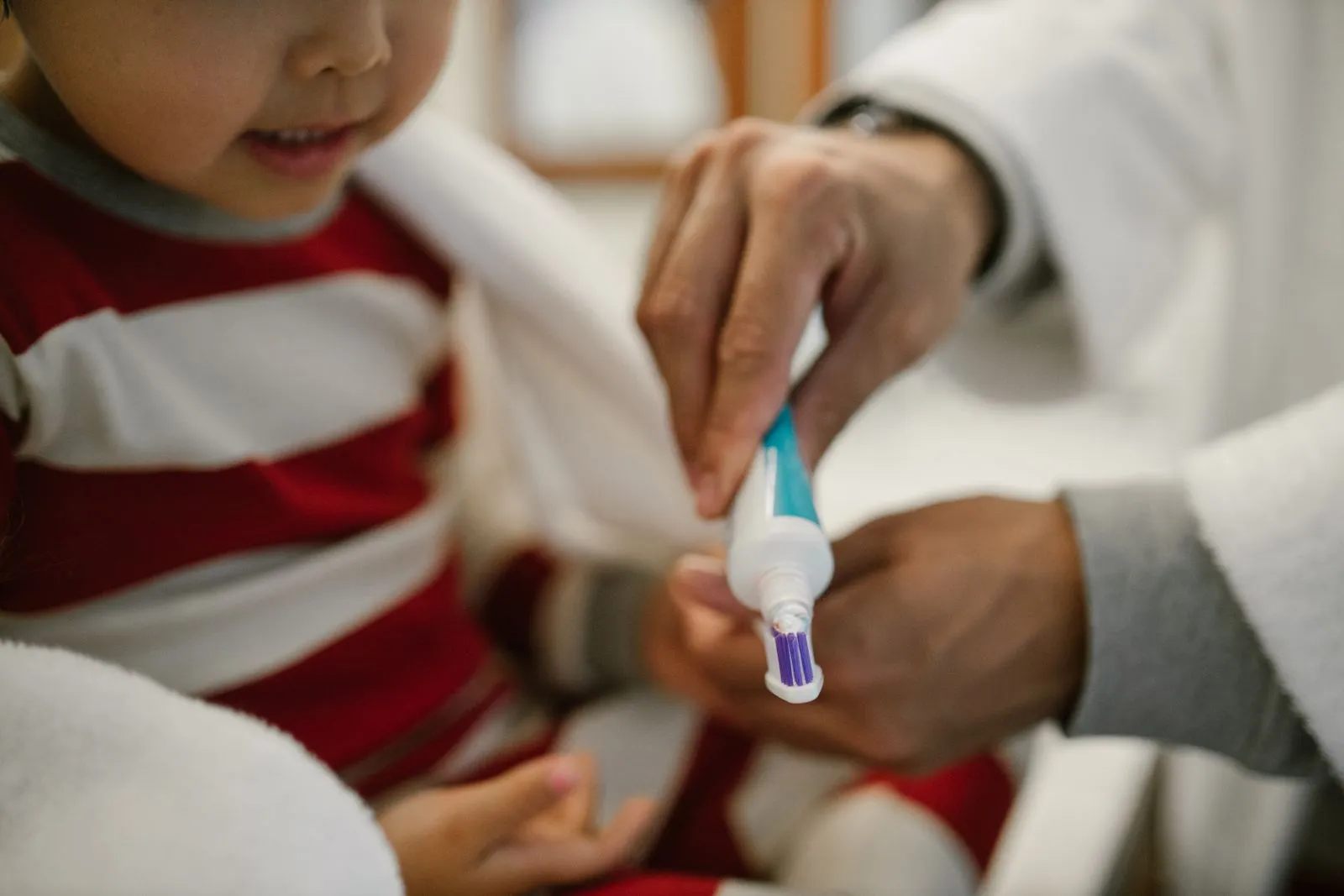
Getting a child to brush can take patience, especially when they would rather keep playing. A predictable routine and a few playful touches can make the task feel less like a battle and more like part of the day. Try a short song, let your child choose a toothbrush, or brush together. Keep the goal simple: help your child brush for two minutes, twice a day, with an adult’s guidance as needed.
Build a Predictable Routine
Choose regular times for brushing, such as after breakfast and before bed. Pair brushing with another familiar activity, like putting on pajamas or reading a bedtime story. When children know what comes next, they may need fewer reminders and feel more prepared to switch from play to brushing.
Use a simple visual routine with pictures: bathroom, brush, rinse, story. Let your child move a marker or check off each step. Keep the chart encouraging rather than focused on punishment. If a routine gets interrupted, calmly return to it at the next brushing time.
Add Songs and Small Games
Pick a favorite two-minute song or use a timer with a cheerful sound. Invite your child to brush while the music plays, then switch sides when the song reaches a familiar part. If you use a video or app, keep it brief and choose one that helps track brushing rather than distracting from it.
Make-believe can help younger children feel more comfortable. Ask them to brush away “sugar bugs,” or take turns brushing a toy’s teeth before their own. Keep the game light, and avoid making brushing feel like a test. Praise the effort: “You kept going until the song ended.”
Let Kids Choose Their Tools
Offer two toothbrush options with a child-friendly size and soft bristles. A favorite color or character can make the brush more inviting, while choosing between options gives your child a sense of control. Replace a brush when its bristles look worn, or follow your dental professional’s guidance.
Use a small amount of fluoride toothpaste appropriate for your child’s age, and check the product label or ask a dentist if you are unsure. Children often need an adult to dispense toothpaste, guide brushing, and help clean every surface. Make the tools fun, but keep adult supervision part of the routine.
Keep Your Response Calm
Some children need time to adjust, so keep expectations steady and your voice relaxed. Give a clear, limited choice: “Would you like to brush before or after pajamas?” Avoid threats or long negotiations, which can turn a short task into a stressful one. If your child resists, pause briefly and try again with a calm reminder.
Brush alongside your child when possible. Children learn by watching, and seeing you follow the same routine can make brushing feel normal. Younger children may need hands-on help to reach all tooth surfaces; ask your child’s dentist when they are ready to take on more of the job.
A steady schedule, a favorite song, and a toothbrush your child helped choose can make daily brushing feel more manageable. Keep the routine simple, supervise as needed, and notice your child’s effort. For age-specific brushing guidance or help with a persistent challenge, ask your child’s dental team at Little Wave Dental.